Textile Craft & Bedding
How a Relaxed, Textured Finish Is Made for Bedding
That softly rumpled look is rarely just a matter of leaving the bed unmade. In natural-fiber bedding, texture can begin in the flax itself, take shape on the loom, and be encouraged by washing and finishing. The result is a surface with ease and character—and a useful reminder that textile craft is often felt as much as it is seen.
A linen sheet with gentle ripples has a particular kind of appeal. It looks welcoming rather than rigid, as if it has already settled into the rhythms of daily life. Yet the relaxed appearance may be carefully made. Fiber selection, yarn preparation, weave structure, washing, and mechanical finishing can all influence whether a cloth feels crisp and orderly or softly textured from the first touch.
Understanding those choices changes how we read bedding. A crease is not automatically evidence of carelessness, and a smooth finish is not automatically evidence of superior workmanship. Each surface tells a different story about materials and production. With linen especially, the fabric’s natural behavior is part of that story: flax yarns are strong, have a distinctive hand, and respond visibly to moisture, pressure, and movement.
“Crushed” or “relaxed” linen is not one universal technical category. The words can describe an appearance, a hand, or a particular finishing approach, and manufacturers may use them differently. The label alone cannot tell you precisely how a fabric was processed. Looking at the fiber, construction, and care instructions together offers a more reliable understanding of what the finish means.
Texture begins before the cloth reaches the bed
Linen starts with flax, a plant whose stalk yields long bast fibers. After harvesting, the fibers are separated from the woody stem, prepared, and spun into yarn. Each of these stages affects the character of the material. Fiber length, preparation, yarn thickness, and spinning tension influence how even or lively the finished thread will be.
Yarn is not simply a neutral ingredient. A tightly spun, uniform yarn tends to create a more controlled surface, while variations in yarn thickness or tension can contribute to a fabric’s visual depth. These differences may be subtle. They are not necessarily flaws: they can be part of the material’s natural character, particularly when a textile is made to reveal rather than conceal the qualities of its fibers.
Once the yarn is ready, it is interlaced on a loom. A plain weave—one of the most familiar structures—alternates the lengthwise warp yarns with the crosswise weft yarns. The density of the weave, the yarn’s size, and the tension held during weaving all help determine the cloth’s weight, stability, and drape. A fabric intended to feel airy and fluid may be constructed differently from one designed to feel firm and crisp.
This is why “linen” alone does not describe a single hand or appearance. Two fabrics made from flax can feel quite different because their yarns, weave, and finishing treatments differ. A tightly controlled cloth may look neat and smooth; another may have a looser drape and a more irregular surface. The finished bedding reflects a sequence of choices, not one magic treatment applied at the end.
What washing and finishing can change
After weaving, fabric may be washed or otherwise finished to prepare it for use. Finishing is a broad term for processes that alter a textile’s hand, appearance, stability, or performance. Depending on the fabric and the maker’s method, treatment may remove residues, relax the structure, soften the surface, or introduce a more lived-in look.
Garment washing and similar wash-based approaches expose cloth to water and movement before it reaches the household. That movement can ease some of the tension created during manufacturing and help the textile settle into a softer, less formal drape. A washed finish may therefore feel less board-like than a crisp, untreated cloth. It can also make mild irregularities more apparent, giving the surface a relaxed character.
Mechanical finishing uses physical action to influence the fabric. Tumbling, agitation, pressing, or other forms of controlled handling can change how yarns sit against one another and how the surface catches light. Some processes are designed to create a particular texture; others are mainly intended to soften or stabilize the cloth, with texture emerging as part of the result. Because methods vary, it is best not to assume that every rumpled linen has been treated in the same way.
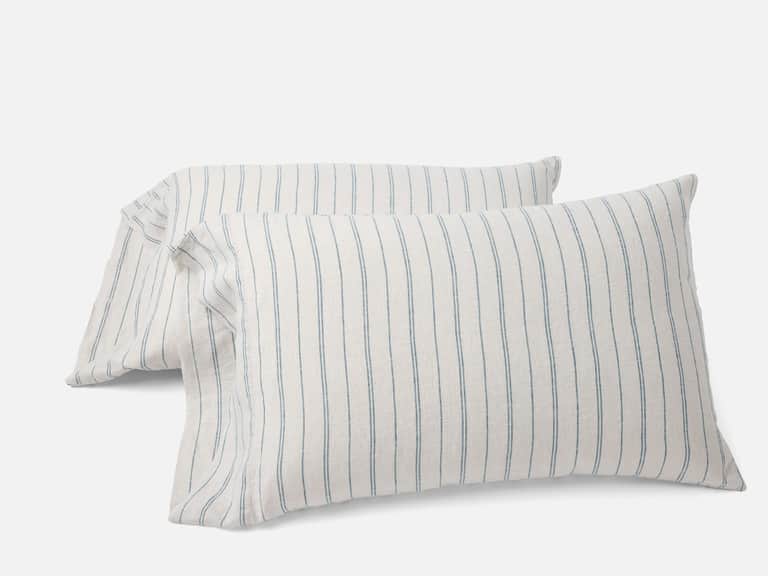
Some finishes also use softening agents. Their composition and purpose differ among manufacturers, so a product description or care label is the most useful source for specific information. For example, the Organic Relaxed Linen Pillowcases are described as garment-washed and finished with a plant-based softener. That combination illustrates how washing and finishing can be presented as distinct parts of a textile’s story, rather than as a single vague claim of softness.
Finish is not a permanent mask over the fabric. Washing, drying, use, and storage continue to influence the surface. A cloth may become more supple through repeated laundering, while creases may appear wherever it is folded, slept on, or gathered. The texture seen on a new item is only one moment in its life.
Why flax responds so visibly to everyday movement
Natural fibers have distinct structures and behaviors. Linen’s characteristic hand and tendency to crease are connected to flax fiber and yarn construction. When cloth is compressed, folded, or bent, yarns and fibers shift; when the pressure is released, the resulting lines may remain visible. This familiar response is part of linen’s appearance, not a reliable measure of whether it has been well cared for.
Moisture and movement can also change how fabric feels. During washing, water reaches the yarns and the cloth moves against itself. Drying then sets the textile into a shape influenced by how it was handled. A sheet dried in a compact pile may look more rumpled than one spread out carefully; either result can occur without implying anything about the quality of the flax or weaving.
Temperature, humidity, and household routines matter, too. In a warm room, bedding may be handled and aired differently than it is in a cool one. Sheets are pulled taut, folded, tucked, or left loose. Over time, these ordinary actions create an individual surface that cannot be entirely standardized. In that sense, the “relaxed” look is partly a production decision and partly an ongoing relationship between the fabric and its use.
It is worth separating visible texture from claims about comfort or health. A rumpled surface may feel appealing to one person and distracting to another, but appearance alone does not establish that a textile is more breathable, hypoallergenic, or durable. Those qualities depend on material composition, construction, finishing, and care. A textured finish can coexist with practical performance, but it should not be treated as proof of it.
Relaxed does not mean poorly made
Textile quality is more complex than smoothness. A carefully made linen may have visible slubs, small variations in yarn, or a softly uneven surface. In some cases, those features reflect the character of natural fibers or the deliberate design of the cloth. Conversely, a polished appearance does not by itself guarantee sound construction. Good assessment looks beyond the first impression.
Consider whether the fabric feels consistent for its intended purpose, whether seams and hems are finished securely, and whether the product information clearly identifies fiber content and care. For bedding, fit and construction matter alongside texture: a fitted sheet must suit the mattress depth, and a duvet cover needs a closure that functions well in regular use. These practical details tell you more than the presence or absence of wrinkles alone.
It can also help to distinguish intentional irregularity from damage. A naturally varied yarn may create small differences throughout the fabric, while a pulled thread, torn seam, or unexplained weak patch may point to a problem. One is a feature of material or design; the other may require repair or a conversation with the seller. The difference becomes clearer when you consider the pattern and location of the variation rather than judging any single mark in isolation.
For a relaxed aesthetic, the goal is not necessarily to eliminate every crease. The appeal often lies in a surface that looks comfortable and tactile without feeling unfinished. Carefully woven cloth, considered hems, and a controlled wash can give bedding an easy drape while retaining the structure needed for everyday use.
How to compare relaxed and crisp bedding
When choosing sheets or pillowcases, start with the experience you prefer rather than with a trend word. “Relaxed,” “washed,” “crisp,” and “smooth” are useful descriptions, but they do not mean exactly the same thing across brands. Read them alongside the stated fiber, weave, weight if supplied, and finishing details.
- Fiber content: Check whether the fabric is linen, cotton, a blend, or another material. A surface that resembles linen may not be made from flax.
- Weave and construction: Plain weave and other constructions can produce different levels of firmness, openness, and drape. Product descriptions may offer useful clues.
- Finishing language: Look for clear details such as garment-washed, stone-washed, or plant-based softener, while remembering that terms may describe different processes.
- Care instructions: Recommended water temperature, drying method, and ironing guidance affect how the fabric will look and feel after laundering.
- Fit and details: Confirm sheet dimensions, pocket depth, closures, hems, and included pieces. These practical points are essential to bedding performance.
A crisp finish may appeal to someone who likes a smooth, orderly bed and is comfortable with more pressing. A relaxed finish may suit someone who prefers a softer drape and accepts visible creasing as part of linen’s character. Neither preference is more authentic. The best choice is the one that fits the household’s comfort, routines, and expectations.
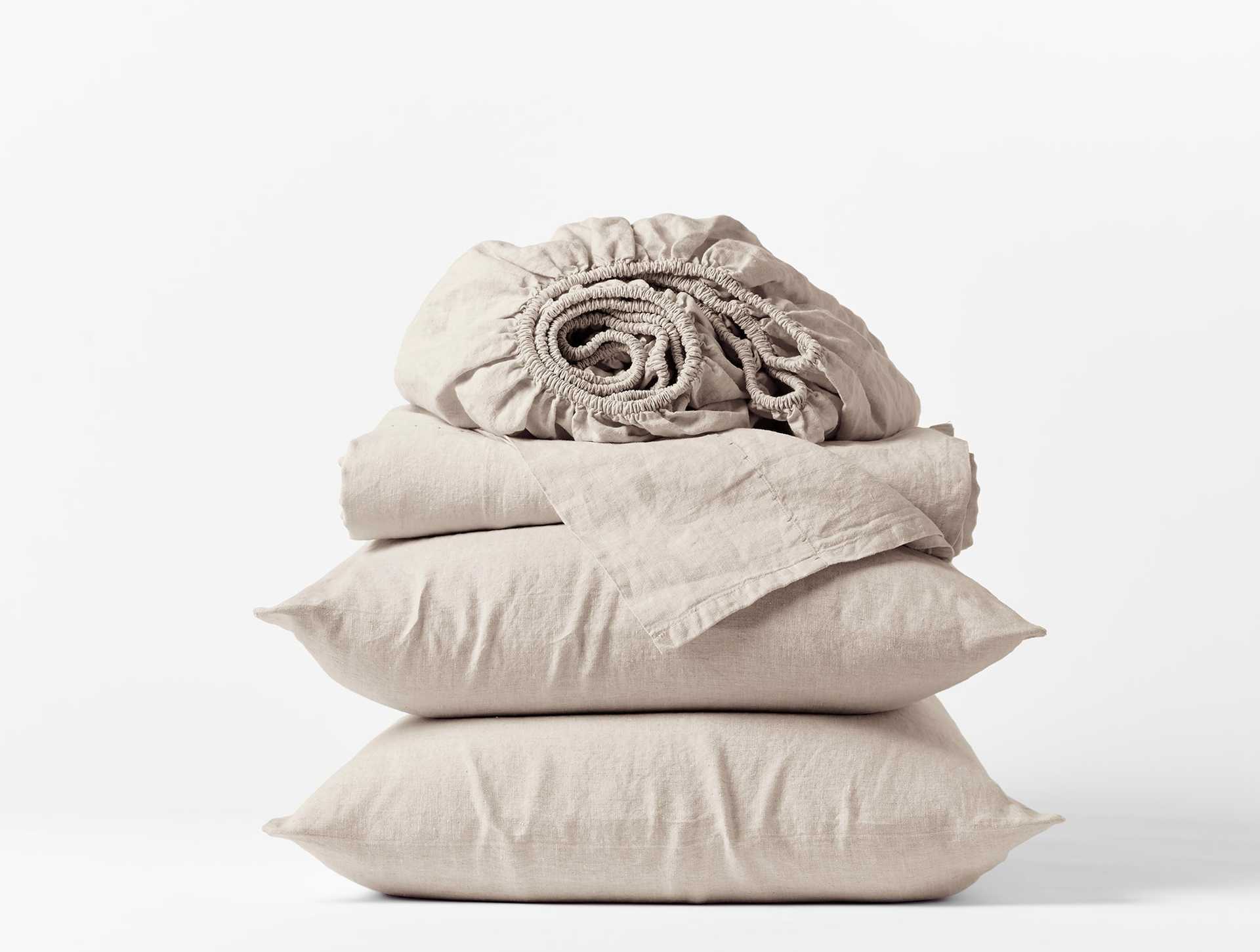
Product details can also help distinguish a relaxed surface from a general marketing description. The Organic Relaxed Linen Sheet Set, for instance, is described as made from organic flax grown in France and woven into linen in Portugal, with a relaxed weave and pick-stitched cuffs. Its care guidance calls for a cold, gentle machine wash and low tumble drying. Those specifics offer a clearer picture than the word “relaxed” on its own.
Care that preserves character—and useful life
Always begin with the care label. Linen products do not all respond identically, and instructions can differ according to yarn, dye, construction, and finishing. If a maker recommends cold washing on a gentle cycle, that advice should take priority over a general rule for linen. The same applies to tumble drying, line drying, and ironing.
For washable bedding, avoiding an overloaded machine gives fabric room to move. Washing with similar colors can reduce unwanted transfer, while a mild detergent and a restrained amount of product help avoid residue. Bleach, whiteners, and fabric softeners may be discouraged for particular textiles; follow the manufacturer’s instructions rather than assuming that every additive is harmless to every finish.
Drying conditions shape the final appearance. Low heat, when permitted, can be gentler than high heat, and removing bedding promptly may limit set-in creases. Line drying can reduce reliance on a dryer, though the cloth may dry in a more visibly rumpled state depending on how it is hung. If a smoother finish is desired, ironing while the fabric is slightly damp may help, provided the care label allows it.
There is no requirement to iron linen simply because it wrinkles. Some households prefer a crisp, pressed finish; others value the soft folds that develop with use. What matters is not achieving a showroom-perfect surface but caring for the fabric in a way that respects its construction and keeps it comfortable and serviceable.
Thoughtful care can also support longevity. Bedding that is washed according to its instructions, dried without excessive heat, and stored clean and dry is more likely to remain useful over time. A texture that changes gradually with laundering is part of the life of the textile. The aim is to distinguish normal evolution from avoidable wear, such as abrasion, snagging, or damage caused by unsuitable washing conditions.
A finish shaped by many hands and decisions
The relaxed surface of natural-fiber bedding is not a single trick. It can emerge from flax’s physical qualities, the way fibers are prepared and spun, the structure and tension of the weave, and the finishing steps chosen after weaving. Daily washing and handling then continue the process. Each stage leaves a small imprint on the cloth.
That layered origin is what makes texture meaningful. A softly rumpled sheet can carry evidence of both skilled production and ordinary use: the discipline of making a stable textile, followed by the freedom of allowing it to drape and crease naturally. The finish can be intentional without appearing formal, and durable without looking rigid.
Next time you smooth a pillowcase or pull back a duvet, notice what the fabric is doing. Is its surface uniformly crisp, gently rippled, or marked with the folds of recent use? Ask what its product description says about fiber, weave, and finishing, then compare that information with the care instructions. Those small observations turn a familiar household textile into something more interesting: a material record of plants, craft, and daily life.